
One day your dog is the one pulling you down the street, and then, almost without noticing, they are the one asking to turn around early. Gray hairs around the muzzle, a slower start in the morning, a little hesitation before the car. If you are wondering when a dog is considered a senior, the answer depends more on size and breed than on a single birthday. This guide explains how veterinarians define senior, the typical ages by size, the signs to watch for, and how to adjust your dog’s routine.
FurEverYoung.shop is operated by All In Enterprises, LLC, independent HealthyHome distributors. The product is StemActive Pets. HealthyHome owns and fulfills it. We do not. We may earn a commission when you shop or join through our links. This is pet wellness education only, not veterinary advice. These statements have not been evaluated by the Food and Drug Administration. This product is not intended to diagnose, treat, cure, or prevent any disease.
The short answer
Most veterinary groups now say a dog becomes a senior when it reaches the last 25 percent of its expected life span. Because small dogs tend to live longer than large dogs, that happens at different ages. Using American Kennel Club data, the American Veterinary Medical Association gives these typical ranges:
- Small and toy breeds (under 20 pounds): about 8 to 11 years
- Medium breeds (20 to 50 pounds): about 8 to 10 years
- Large breeds (50 to 90 pounds): about 8 to 9 years
- Giant breeds (over 90 pounds): about 6 to 7 years
You can read the full guidance on the AVMA’s caring for senior cats and dogs page. Mixed-breed dogs usually follow the range for their adult weight.
Why there is no single senior age
The old rule that one dog year equals seven human years is not accurate, and it was never a good way to define seniority. A Chihuahua and a Great Dane can both be eight years old, but the Great Dane is much closer to the end of its expected life span. That is why the American Animal Hospital Association’s 2019 canine life stage guidelines define the senior stage by the share of life remaining rather than by a fixed number. The AAHA life stage definitions run from puppy to young adult, mature adult, senior and end of life.
If you want to translate your dog’s age into human terms for fun, our guide to dog years to human years explains the newer, size-based math.
Signs your dog is entering the senior years
Age on paper is only part of the picture. Many owners notice the change first in everyday habits:
- Slower mornings. Taking longer to get up after a nap, or stiffness that eases after moving around.
- Less interest in long walks or play. Shorter outings, more breaks, less enthusiasm for fetch.
- Hesitation with stairs, jumping or the car. Often one of the first things owners spot.
- Weight changes. Many older dogs gain weight as they become less active, while some lose it.
- Gray hair and coat changes. Graying around the muzzle and eyes, and a coat that feels different.
- Changes in sight, hearing or sleep. Cloudier eyes, slower responses to your voice, or a different sleep pattern.
Any of these can also have a medical cause, so mention them to your veterinarian rather than putting them down to age alone. The AVMA reminds owners that age is not a disease, and many changes are easier to manage when they are caught early.
How to adjust care for a senior dog
Plan more frequent vet visits
The AVMA suggests senior pets see a veterinarian twice a year or more. Those visits often include more in-depth checks, dental care and possibly bloodwork, so changes can be found early.
Watch weight closely
Extra pounds put more load on older joints. A quick hands-on check at home makes it easy to track; see how to tell if your dog is overweight. Ask your vet whether a diet designed for older dogs makes sense.
Keep them moving
Regular, gentle activity helps older dogs stay mobile and maintain muscle. Shorter, more frequent walks, swimming and sniff-heavy outings are great options. Our guide to exercise for senior dogs has low-impact ideas.
Make the home easier
Rugs or runners on slippery floors, a supportive bed, a ramp for the car or couch and raised bowls can all make daily life more comfortable.
Keep their mind busy
Puzzle feeders, short training sessions and new walking routes give older dogs mental exercise as well as physical.
Where StemActive Pets fits
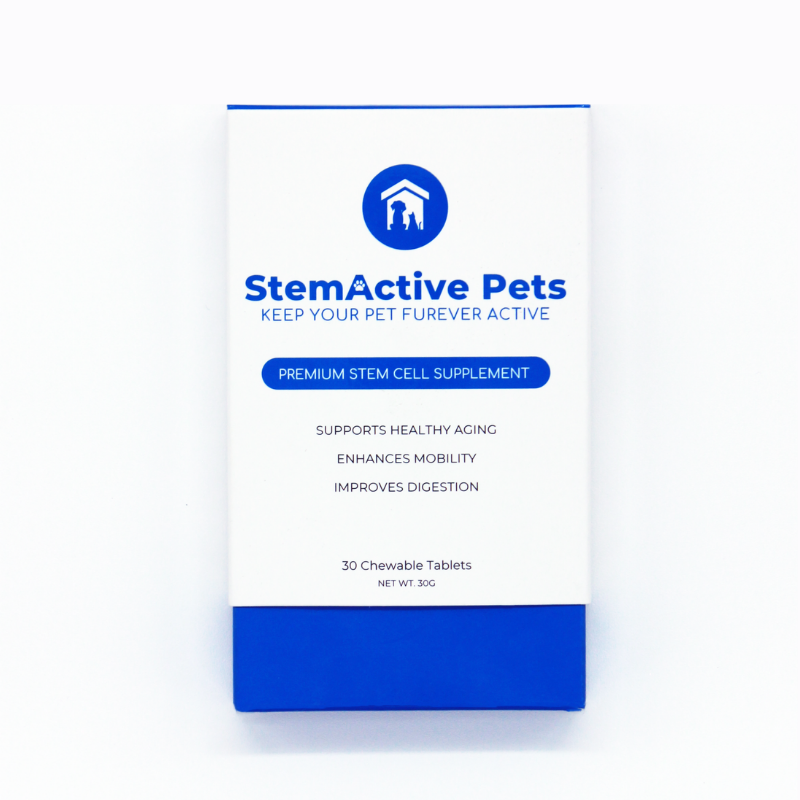
StemActive Pets is an optional daily chewable tablet from HealthyHome, positioned to support joint health and mobility as part of a healthy routine. It is not a medicine, it is not meant to address any medical condition, and it does not replace veterinary care, a good diet or regular activity. Many owners start a joint-support chew around the time their dog moves into the senior stage, or a little before. Our guide on when to start dog joint supplements covers that timing question.
For more about older dogs specifically, see stem cell support for senior dogs and the StemActive Pets for dogs routine guide. Talk with your veterinarian first if your dog has a health condition or takes medication, and count chews with your dog’s other treats.
When is a dog considered a senior? FAQ
At what age is a dog considered a senior?
It depends on size. Veterinary groups define senior as the last 25 percent of a dog’s expected life span, which typically means about 6 to 7 years for giant breeds and about 8 to 11 years for small breeds.
Is a 7-year-old dog a senior?
For giant breeds, often yes. For most small and medium dogs, 7 is usually still the mature adult stage, with the senior years starting around 8 or later.
Do large dogs age faster than small dogs?
Yes. Larger breeds tend to have shorter life spans, so they reach the senior stage earlier than small breeds.
How often should a senior dog see the vet?
The AVMA suggests twice a year or more for senior pets, so changes can be found early.
When should I start a joint supplement for my dog?
Many owners start around the senior stage or a little earlier, especially for large breeds. Ask your veterinarian what makes sense for your dog.
Shop or Join (All In Enterprises, LLC)
HealthyHome handles payment, shipping, and fulfillment. All In Enterprises, LLC are independent distributors.
Shop StemActive Pets · Join & Get Member Pricing
Shop for customer pricing. Join for member pricing and the optional ability to share; earnings are never guaranteed. Many members enroll only for pricing.
FurEverYoung.shop is operated by All In Enterprises, LLC, independent HealthyHome distributors. StemActive Pets is a HealthyHome product. This content is for pet wellness education only and is not veterinary advice. These statements have not been evaluated by the Food and Drug Administration. This product is not intended to diagnose, treat, cure, or prevent any disease.