
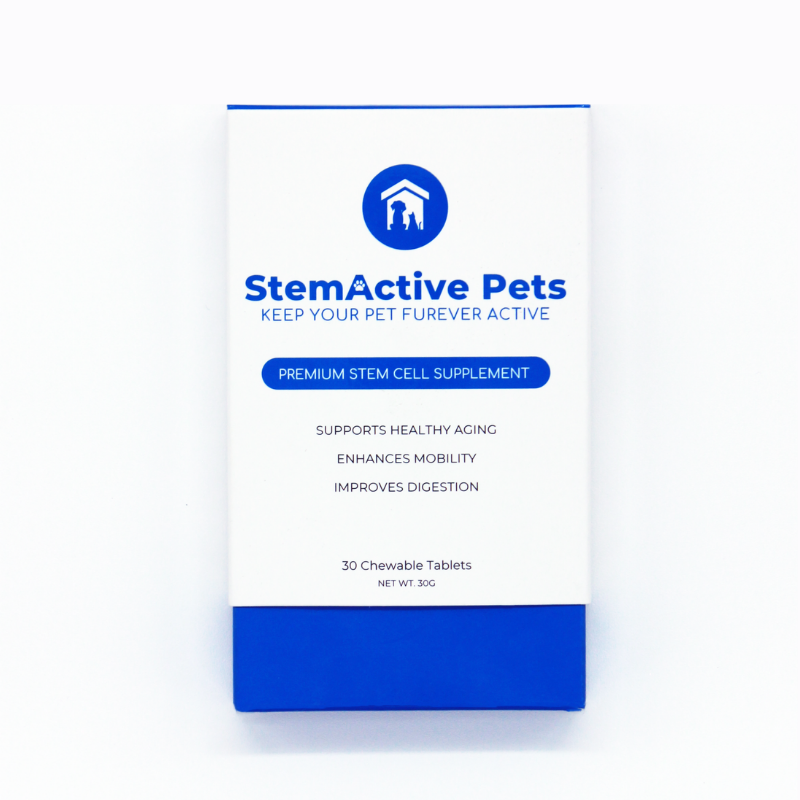
You have probably heard that one cat year equals seven human years. It is a tidy rule, and it is wrong in both directions. A one-year-old cat is not a seven-year-old child. It is closer to a teenager. And a fifteen-year-old cat is not a centenarian. If you searched cat years to human years, this guide gives you the conversion that cat-care experts actually use, a simple chart, the life stages that matter more than the number, and what changes in care as your cat moves through them, including where an optional daily chew like StemActive Pets fits.
FurEverYoung.shop is operated by All In Enterprises, LLC, independent HealthyHome distributors. The product is StemActive Pets. HealthyHome owns and fulfills it. We do not. We may earn a commission when you shop or join through our links. This is pet wellness education only, not veterinary advice. These statements have not been evaluated by the Food and Drug Administration. This product is not intended to diagnose, treat, cure, or prevent any disease.
The short answer
Cats grow up fast and then age more steadily. A common rule from International Cat Care is that the first two years of a cat’s life equal about 24 human years, and every year after that adds about 4. So a 2-year-old cat is roughly 24 in human terms, a 6-year-old is about 40, a 10-year-old is about 56 and a 15-year-old is about 76. It is an estimate, not a medical measurement, but it is far closer than multiplying by seven.
Cat years to human years chart
This chart follows the International Cat Care guide to your cat’s age in human years:
- 6 months: about 10 human years
- 1 year: about 15
- 2 years: about 24
- 3 years: about 28
- 4 years: about 32
- 5 years: about 36
- 6 years: about 40
- 7 years: about 44
- 8 years: about 48
- 10 years: about 56
- 12 years: about 64
- 14 years: about 72
- 15 years: about 76
- 18 years: about 88
- 20 years: about 96
To work it out yourself: take 24 for the first two years, then add 4 for every year after that. A 9-year-old cat is 24 plus 7 times 4, or about 52.
Why the seven-year rule does not work for cats
Kittens race through development. By their first birthday most cats are physically mature, and many can already have kittens of their own. That is why the first year counts for so much. After about two, the pace evens out, and each year adds a smaller, steadier amount of aging. A straight multiplier misses that early sprint and then overstates the later years.
Lifespan matters too. International Cat Care notes that cats live on average for around 12 to 14 years, and it is not unusual for some to reach their late teens or early twenties. Indoor cats with good care often sit at the longer end. Dogs follow a different curve that also depends on size, which our guide to dog years to human years explains.
Life stages matter more than the number
Veterinarians care less about an exact human age than about which stage of life your cat is in, because care needs change with each one. The 2021 AAHA/AAFP Feline Life Stage Guidelines group cats like this:
- Kitten (birth to 1 year): rapid growth, vaccines, spay or neuter, and lots of play and socializing.
- Young adult (1 to 6 years): peak energy. Good habits now, such as measured meals and daily play, pay off later.
- Mature adult (7 to 10 years): roughly the equivalent of middle age. Activity often drops and weight can creep up.
- Senior (over 10 years): the stage where subtle changes in movement, appetite, grooming and sleep are most worth watching.
Caring for your cat at each stage
Young adult: build the habits
Keep your cat lean and active. Short daily play sessions with a wand toy, climbing spots and food puzzles help. Our guide on how to exercise an indoor cat has easy ideas.
Mature adult: watch the waistline
From about seven, many cats need fewer calories than they used to. Measure meals, count treats and keep play in the daily routine. A yearly checkup is a good time to ask your vet about your cat’s weight and body condition.
Senior: make life easier and notice changes
Cats are good at hiding discomfort, so changes are often subtle. A senior cat may stop jumping onto a favorite shelf, groom less, sleep more or use the litter box differently. The 2021 AAFP Feline Senior Care Guidelines note that cats age much faster than humans and suggest more frequent veterinary checkups as cats get older. Simple home changes help too: a litter box with lower sides, ramps or steps to favorite spots, and food and water within easy reach.
For a deeper look at this stage, read our guide to support for aging cats.
Where StemActive Pets fits
Good food, a healthy weight, daily play and regular veterinary care are the foundation at every age. Some owners also add a daily supplement once their cat reaches the mature or senior years. StemActive Pets for cats is an optional daily chew from HealthyHome, positioned to support joint health and mobility as part of a healthy routine. It is an add-on, never a substitute for veterinary care, and it is not a treatment for any condition. If you are wondering whether your cat needs a supplement at all, start with our food-first guide do cats need supplements? Talk with your veterinarian first if your cat has a health condition or takes medication.
FAQ: cat years to human years
How old is my cat in human years?
A common guide is that the first two years of a cat’s life equal about 24 human years, and each year after that adds about 4. A 6-year-old cat is about 40 in human years and a 10-year-old is about 56.
Is one cat year equal to seven human years?
No. Cats mature very quickly in their first year or two and then age more steadily, so a single multiplier of seven is not accurate. A one-year-old cat is closer to a 15-year-old person.
At what age is a cat considered a senior?
The 2021 AAHA/AAFP Feline Life Stage Guidelines describe cats over 10 years old as seniors, with 7 to 10 years as the mature adult stage.
How long do indoor cats live?
Cats live on average for around 12 to 14 years, and some reach their late teens or early twenties. Good nutrition, a healthy weight and regular veterinary care help cats enjoy their later years.
Should my older cat take a supplement?
Not every cat needs one. Talk with your veterinarian first. Some owners add an optional daily chew such as StemActive Pets for cats to support joint health and mobility as part of a routine that also includes good food, play and checkups.
Shop or Join (All In Enterprises, LLC)
HealthyHome handles payment, shipping, and fulfillment. All In Enterprises, LLC are independent distributors. Learn more on our StemActive Pets for cats page.
Shop StemActive Pets · Join & Get Member Pricing
Shop for customer pricing. Join for member pricing and the optional ability to share; earnings are never guaranteed. Many members enroll only for pricing.
FurEverYoung.shop is operated by All In Enterprises, LLC, independent HealthyHome distributors. StemActive Pets is a HealthyHome product. This content is for pet wellness education only and is not veterinary advice. These statements have not been evaluated by the Food and Drug Administration. This product is not intended to diagnose, treat, cure, or prevent any disease.